
Every factory turbo for the 4G63 comes from one family, the TD05, from the 14B on the Galant VR-4 to the TD05HRA-16G6C-10.5T on the Evolution IX. A bolt-on upgrade keeps the factory mounting and adds a larger compressor wheel. The limit on a stock engine is the connecting rods, which Tomei puts at 360 to 370 PS.
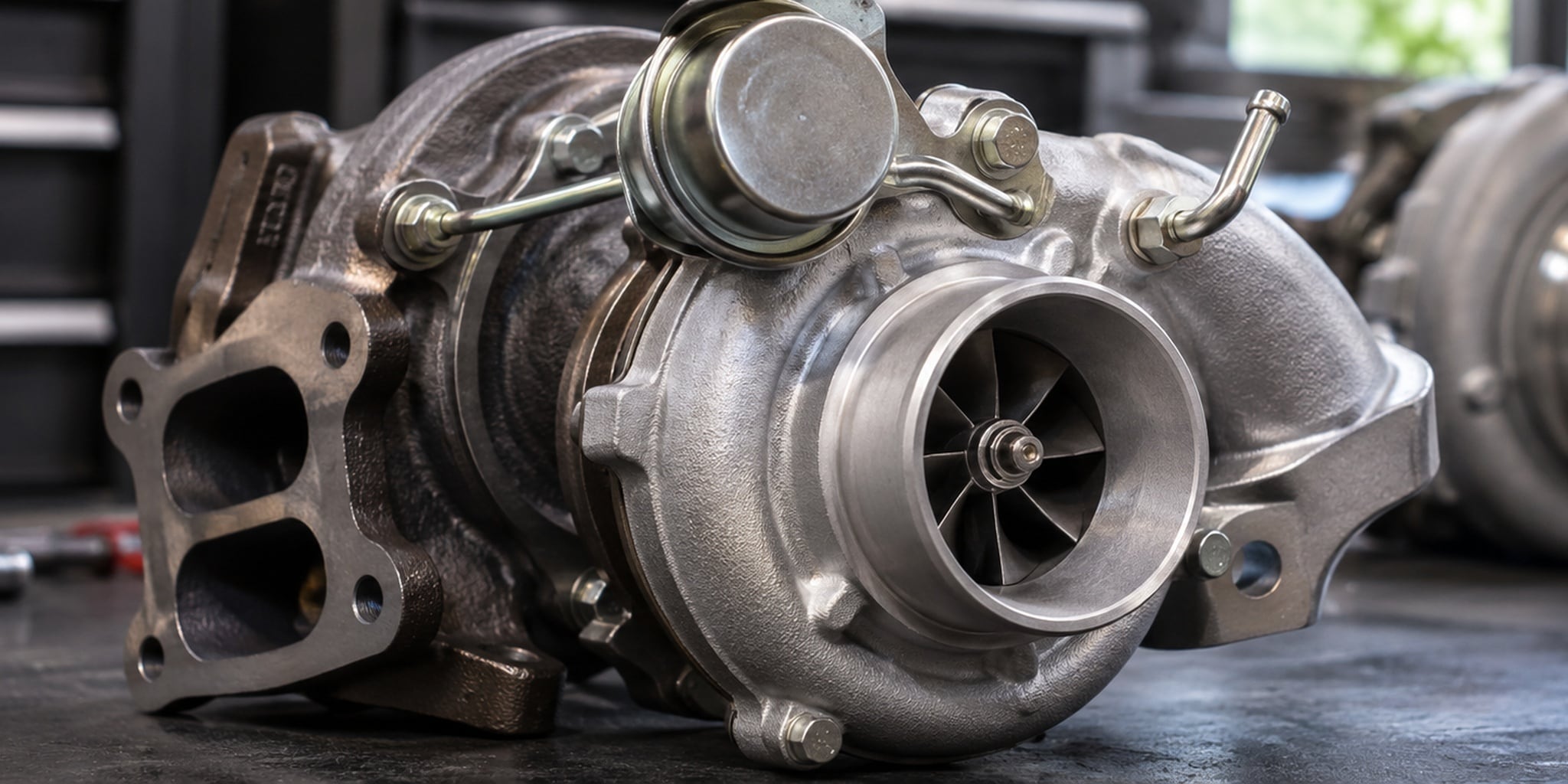
Turbo for 4G63: the factory TD05 units and what replaces them
Choosing a turbo for 4G63 engines: the factory TD05 units from the Galant VR-4 to the Evo 9, their limits, and bolt-on upgrades.
An illustration made for this article. Illustration made with ChatGPT, not a photograph
TD05Factory turbo familyGalant VR-4 to Evo 9
68.0 mmStock compressor wheelEvo 9 GSR, per Tomei
13 psiMax boost, 9T turboPer Motor Reviewer
370 PSStock engine ceilingTomei, for the rods
At a glance
The factory turbo for the 4G63, car by car
The 4G63 is a 1,997 cc inline-four with an 85 mm bore and an 88 mm stroke. Wikipedia dates the DOHC version to 1987, in the Japanese-market Galant, and Motor Reviewer notes that the first 4G63 turbo engine was installed in the Galant VR-4.
Motor Reviewer's history of the engine lists the turbochargers in the order Mitsubishi fitted them.
| Factory turbo | Where it was used | Detail |
|---|---|---|
| TD05H 14B | Galant VR-4 and early manual cars | The first of the line |
| TD05 16G | Early Evolutions | 60 mm compressor wheel |
| TD05 16G6 | Later 1990s Evolutions | 68 mm compressor wheel |
| TD05HR-16G6-9T | Later 1990s Evolutions | Max boost 0.9 bar, 13 psi |
| TD05HR-16G6-10.5T | Later 1990s Evolutions | Twin scroll |
| TD05HR-16G6-9.8T | From the Evolution VII | New camshafts and intake manifold with it |
| TD05HRA-16G6C-10.5T | Evolution IX | Fitted with MIVEC |
The names decode simply. TD05 is the frame, 16G is the compressor wheel, and the last figure is the size of the turbine housing's nozzle, so a 10.5T housing is larger than a 9.8T. The R marks the reverse-rotation units used once the engine was turned around in the bay.
60 mm16G compressor wheel
68 mm16G6 compressor wheel
13 psiMax boost, 9T turbo
Sources do not agree on when the twin-scroll housing arrived. Motor Reviewer places it with the 10.5T unit, while this site's own generation data, drawn from Mitsubishi's history, gives the Evolution IV a twin-scroll turbo. Our Evo generations article walks through each car.
4G63 cars and the 4G63 van
The list of 4G63 cars is longer than the Evolution. Motor Reviewer names the turbocharged ones: the Galant VR-4, the first two generations of the Eclipse, and the Lancer Evolution I through IX. Wikipedia's application list gives the Lancer Evolution's run as 1992 to 2007.
There is a 4G63 van as well. The same Wikipedia list shows the engine in the Mitsubishi Delica from 1985 to 1998 and in the Chariot, a tall people carrier, from 1983 to 1998. Those are the ordinary versions of the engine, not the Evolution's, so their turbo parts should not be assumed to interchange.
For a buyer of turbo parts this matters in one way. A turbo listed for a 4G63 has to be matched to the car, because the mounting, the rotation and the actuator differ between a Galant VR-4, an Eclipse and an Evolution.
What replaces the stock turbo
A bolt-on unit takes the factory turbo's place on the factory manifold. Tomei's ARMS M7963 kit is a clear example with published numbers. It fits the Evolution IV through IX and lists at 195,000 yen before tax. Tomei calls it "a perfect choice for bored/stroked 4G63, as well as lightly tuned 4G63 with stock displacement."
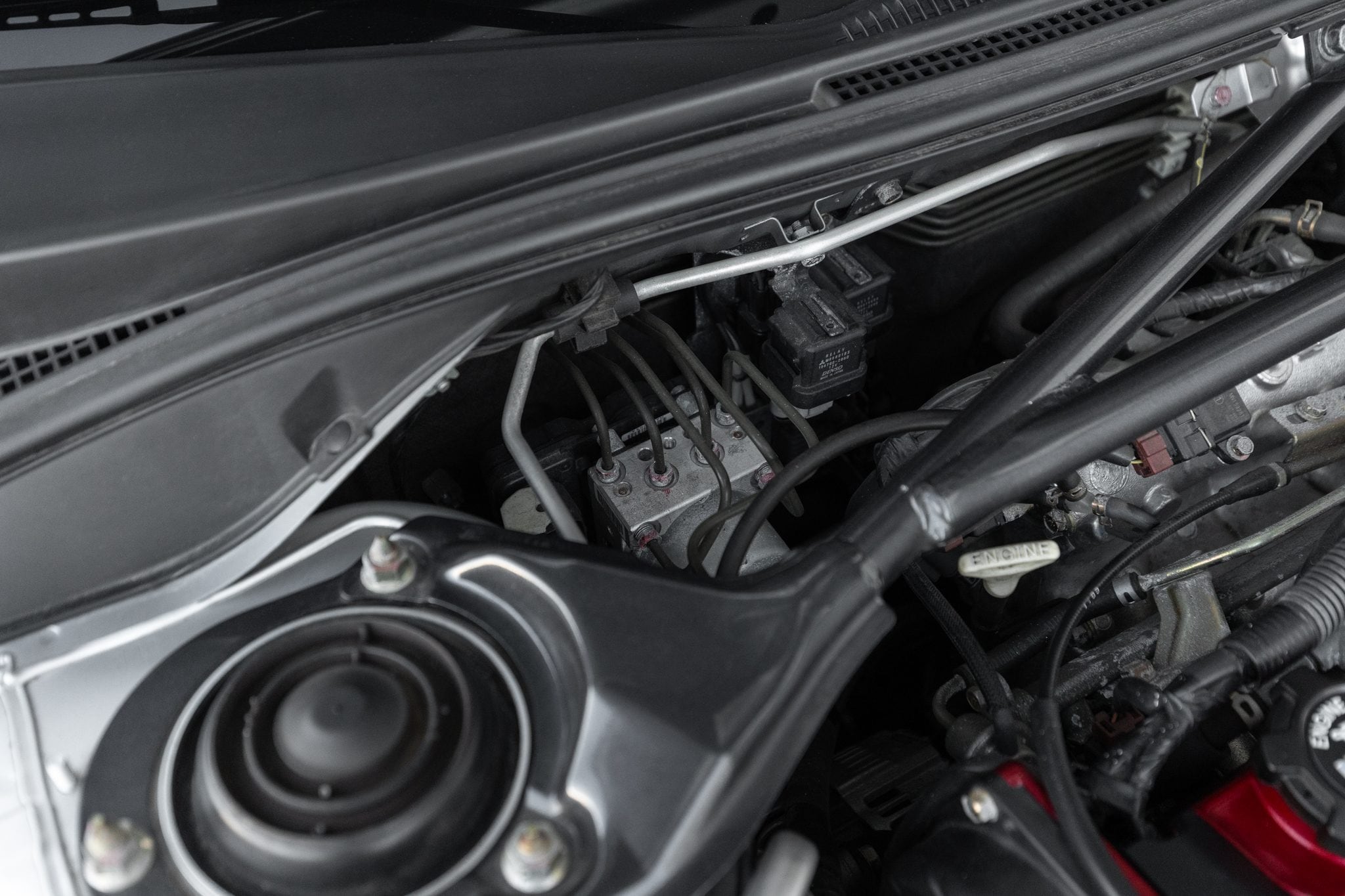
Tomei's own table shows what the money buys. The stock Evo 9 GSR compressor wheel measures 48.3 mm at the inducer and 68.0 mm at the exducer. The ARMS wheel measures 56.3 mm and 75.0 mm.
| Compressor wheel | Inducer | Exducer |
|---|---|---|
| Evo 9 GSR, stock 16G | 48.3 mm | 68.0 mm |
| Tomei ARMS | 56.3 mm | 75.0 mm |
In the US the common names are Forced Performance's, the FP Green, Red and Black. STM Tuned describes its Evo 8 and 9 intake pipe as designed for "bolt-on FP Turbos such as the Red, Black, Zero and Zephyr." STM's listing for the FP Green notes that it is based on the Evo 9 turbo, so an Evo 8 needs the Evo 9's J-pipe, water lines and actuator to fit one.
A larger turbo also outgrows the factory airflow meter. Our speed density intake article covers the intake pipes built for these turbos.
Stock or built 4G63: where the limit is
The block is rarely the weak point. The iron that makes it strong also adds to 4G63 weight, and DSPORT gives the aluminum 4B11T as 26 lbs lighter. DSPORT writes that the cast-iron engine "has proven to withstand high-horsepower production," with hundreds of stock block examples over 600 horsepower at the wheels.
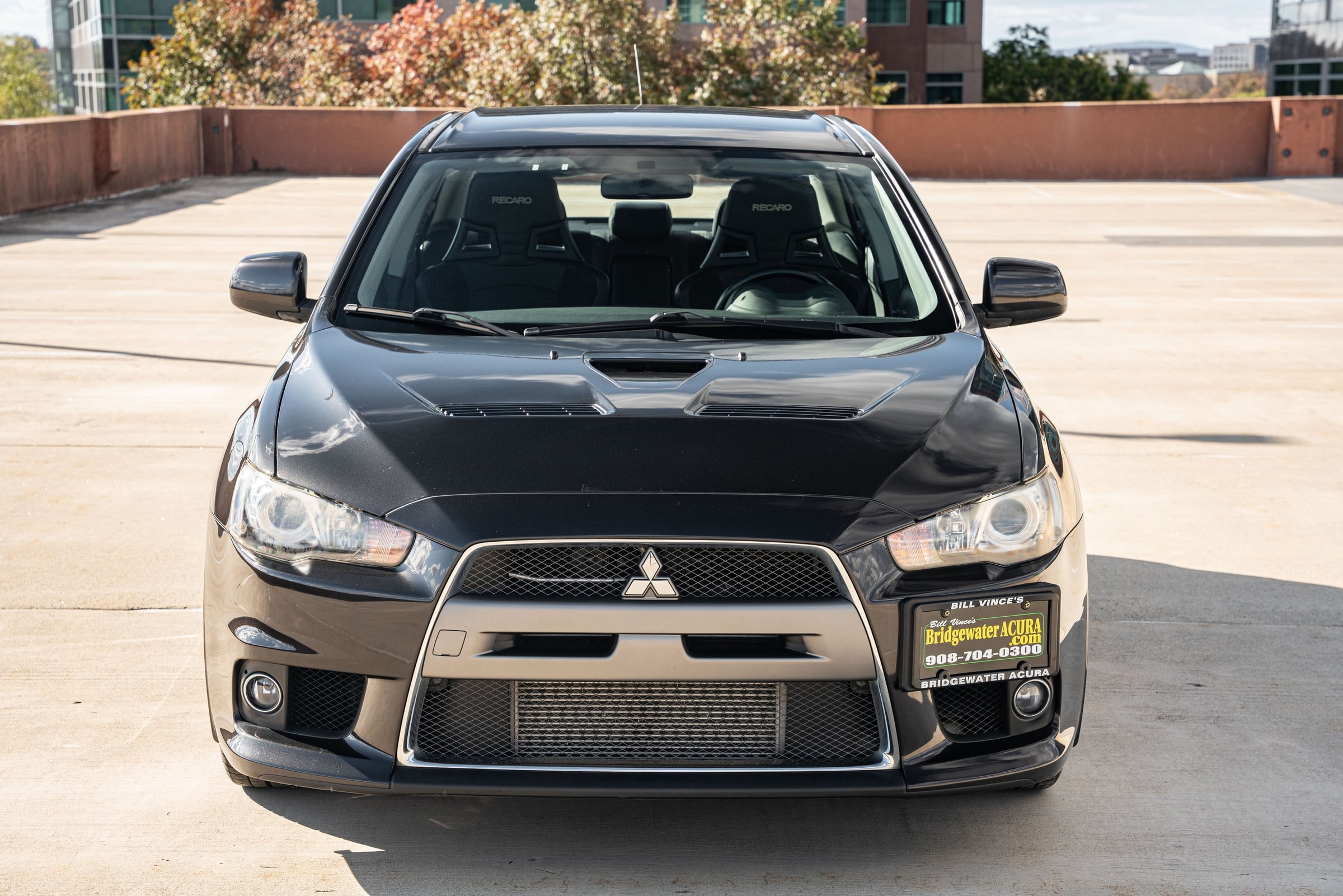
The rods are the caution. Tomei's advice with its bolt-on kit is direct: "In the case of a stock engine, there is a concern about the strength of the connecting rods," so it recommends a maximum of 360 to 370 PS. Past that point the engine wants forged internals.
A built 4G63, with stronger rods and pistons, moves the ceiling a long way. DSPORT notes that fully built examples "have exceeded 1,200 horsepower." The turbo for an engine like that is no longer a bolt-on TD05 but a larger unit on its own manifold.
370 PSTomei's stock engine ceiling
600 hpStock block, at the wheels
1,200 hpFully built examples
4G63 cams and the crankshaft
A turbo upgrade and 4G63 cams go together. Tomei's recommendation with the ARMS kit is its own Poncam Type-R camshaft, along with injectors of 620 cc or more. Mitsubishi changed the factory cams along the way too, and Motor Reviewer notes new camshafts arriving with the Evolution VII's 9.8T turbo.
The last 4G63 camshafts are the ones in the Evolution IX, which added MIVEC variable valve timing. DSPORT points out that on the Evo 9 it worked on the intake cam only. The cams act on the valves through a rocker arm, and the 4G63 head pairs each rocker with a hydraulic lifter, a layout DSPORT notes the later 4B11T dropped. Our 4G63 engine article covers MIVEC and the engine's other changes.
The 4G63 crankshaft is one of the engine's strengths. Motor Reviewer describes a "strong and durable crankshaft" with light 150 mm forged connecting rods, and gives the Evolution VIII's lightened crankshaft as 13.38 kg. Wikipedia adds a detail that matters when mixing parts: Evolution engines from May 1992 use seven bolts to secure the flywheel to the crankshaft.
Where to go next
- Evo VIII cars for sale and Evo IX cars for sale list the two 4G63 cars sold in the US.
- Evo values shows what every generation sells for.
- The 4B11 engine article covers the engine that replaced the 4G63.
Sources and photo credits (10)
- Tomei Powered, ARMS M7963 turbo kit for the 4G63, Evolution IV to IX
- DSPORT, Exploring the limits: Evo X 4B11T and 4G63
- Motor Reviewer, Mitsubishi 4G63T engine specifications and history
- STM Tuned, Evo 8 and 9 speed density intake pipe
- STM Tuned, FP Green Evo IX turbo
- Wikipedia, Mitsubishi Sirius engine
- Photo 1: 19k-Mile 2006 Mitsubishi Lancer Evolution IX MR, Bring a Trailer listing by FridaysMotors (photo 9O4A6952-50940)
- Photo 2: 25k-Mile 2008 Mitsubishi Lancer Evolution X MR, Bring a Trailer listing by Bridgewater_Acura (photo DSC09823-81539)
- Cover image: an illustration made with ChatGPT, not a photograph
- Articles page image: an illustration made with ChatGPT, not a photograph



Register your Evo
Claim your VIN or chassis number. Your car gets a page with its photos, its ownership chapters and every sale on record.
Register your EvoPhoto: Bring a Trailer listing by jegerdahl
Comments
Members can correct a mistake in this article or add to it here.
Log in or sign up free to comment.