
An Evo 8 9 speed density intake is a pipe and filter with no mount for the factory mass airflow sensor. It only works on a car that has already been converted to speed density, where a pressure sensor and an air temperature sensor do the MAF's job. The common kits are 3.5 inches across and fit both the Evolution VIII and IX.
Evo 8 9 speed density intake: what it replaces, and what fits
An Evo 8 9 speed density intake is a larger pipe with no place for the factory MAF sensor, for cars already converted to speed density.
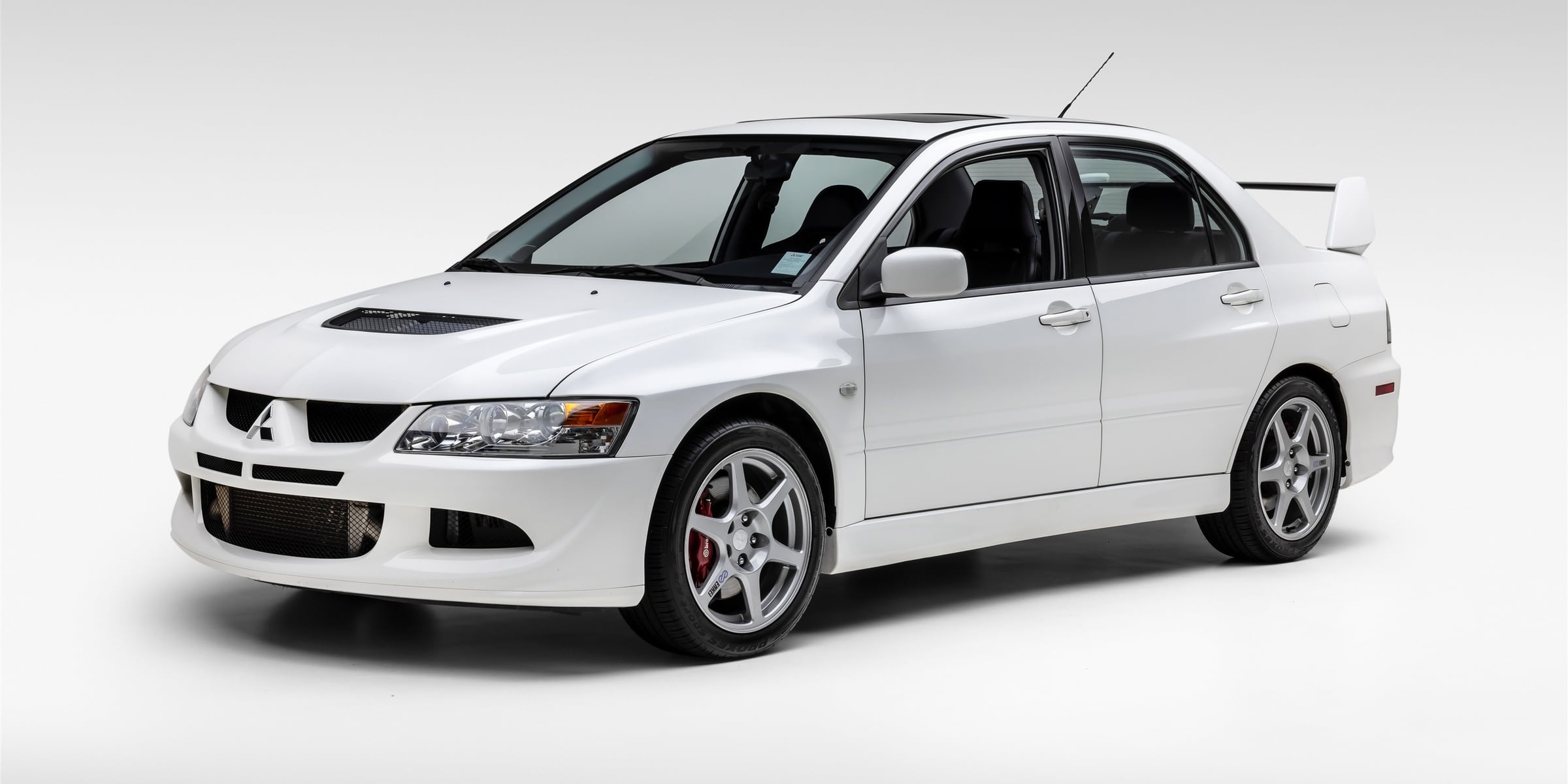
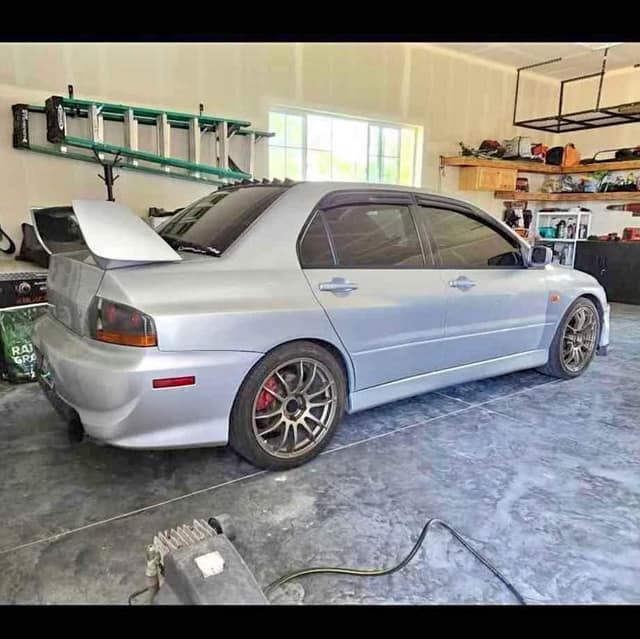
A 2004 Lancer Evolution VIII. Its 4G63 left the factory metering air with a MAF sensor. Photo: Bring a Trailer listing by silverarrowcarsltd
3.5 inSTM aluminum pipeSpeed density only
4 inSTM titanium pipeDoes not fit ACD
4 barMAP sensor, Lamspeed kitWith an AIT sensor
9 inK&N filter3.5 in STM kits
2.5 inStock turbo inletCoupler size
At a glance
What the factory intake does on an Evo 8 and 9
From the factory, the Evolution VIII and IX measure incoming air with a mass airflow (MAF) sensor mounted off the intake pipe, ahead of the turbocharger. The engine is the 2.0-liter 4G63, rated at 271 hp in the first US Evo 8. The site's 4G63 engine article covers the engine itself.
The MAF is a metering device first and a piece of plumbing second. Lamspeed Racing, which sells a conversion kit, describes it as a restriction in airflow over the long term. It also names two side effects owners run into on modified cars:
- A vent-to-atmosphere blow-off valve causes trouble on a MAF car, because air the sensor has already counted leaves the system.
- If an intercooler pipe pops off, the factory ECU adds fuel for air that never arrives, and the car idles rough and is close to undrivable.
What a speed density intake changes on an Evo 8 or 9
Speed density takes the MAF out of the picture. In place of a sensor in the intake stream, the engine computer works from manifold pressure and air temperature. The Lamspeed kit for the Evo 7, 8 and 9 shows what that takes in parts: a 4 bar MAP sensor with its plug, an air intake temperature (AIT) sensor with a weld-on bung, and a wiring harness, all meant to work with the stock ECU.
With no MAF to mount, the intake pipe can be larger and simpler. That is the whole reason a speed density intake exists as a separate part. Lamspeed lists the gains as a larger intake pipe, better turbo spool and more power when paired with a larger turbocharger, plus an improved idle.
The order matters. STM, the New York shop that builds most of the pipes sold for these cars, puts the same line on every one: the pipe does not work with the MAF and is for speed density only. The conversion, sensors and engine calibration included, has to be on the car before the pipe goes on.
Evo 8 9 speed density intake options, compared
STM lists three speed density pipes for the 2003 to 2006 Evolution VIII and IX, and one kit for cars that keep the MAF.
| Intake | Pipe | Works with the MAF | ACD cars |
|---|---|---|---|
| STM Stock MAF kit | Aluminum, MAF adapter | Yes | Fits |
| STM 3.5 in Aluminum SD | 3.5 in aluminum | No | Fits |
| STM 3.5 in Titanium SD | 3.5 in pie-cut titanium | No | Fits |
| STM 4 in Titanium SD | 4 in pie-cut titanium | No | Does not fit |
3.5 inAluminum and titanium SD pipes
4 inTitanium SD pipe
9 inK&N filter, 3.5 in kits
The 3.5 inch aluminum pipe
This is the one most cars end up with. STM says it was designed for bolt-on FP turbos and works with any stock or stock-placement turbo. The kit includes the 3.5 inch TIG-welded aluminum pipe, a 9 inch K&N filter, a silicone reducing coupler and two clamps. It comes in brushed aluminum or two black powdercoats.
The 3.5 inch titanium pipe
The titanium version has the same layout and the same fitment in pie-cut titanium, at a higher price. STM describes it as compatible with all bolt-on, stock-location turbos.
The 4 inch titanium pipe
The 4 inch pipe is for a different car. STM built it for its own standard placement turbo kits with a 4 inch compressor inlet, and it ships with a 4 inch straight coupler. Titanium parts are made to order, with a stated build time of 2 to 4 weeks.
What fits: turbo inlet, ACD and the catch can
Three fitment questions decide which pipe to order.
Coupler size
The 3.5 inch pipes are ordered with a coupler to match the turbo. STM lists 2.5 inches for the stock turbo inlet, 3 inches and 3.25 inches for two families of upgraded turbos, and 3.5 and 4 inches for larger inlets. A stock-turbo car on speed density orders the 2.5 inch coupler.
ACD
ACD is the Active Center Differential, and its fluid reservoir sits in the path of the intake. Mitsubishi's announcement for the 2005 model year said the Evolution gained ACD that year, so in the US the 2005 Evo 8 and the Evo 9 are the ACD cars. Both 3.5 inch pipes clear the reservoir and fit ACD and non-ACD cars. The 4 inch titanium pipe does not fit with ACD.
Crankcase vent
Each STM pipe can be ordered with a -10AN bung on the underside, a $30 option on the aluminum pipe and $50 on the titanium ones. It lets a sealed catch can vent into the intake pipe. Without a catch can, STM suggests venting the crankcase at the valve cover with a small breather filter.
Staying on the MAF
Not every car needs the conversion. For an Evo 8 or 9 that keeps the factory sensor, STM sells an intake kit with a MAF adapter that fits all stock turbo inlets and any aftermarket turbo with a 2.5 inch compressor inlet. STM reports a gain of 13 hp on a stock Evo 8 on its own dyno, from 4,000 rpm up. That is the shop's figure, not an independent test.
STM prices it close to the aluminum speed density pipe, and it comes without the sensors, wiring and calibration that speed density requires. For a stock-turbo street car, that is the simpler path.
Where to go from here
The Evo VIII page has the specs and production counts for the 2003 to 2005 cars. The Evo VIII for-sale page lists the cars on the US market now, many of them already modified. The values page shows what each generation sells for.
Sources and photo credits (9)
- STM Tuned, STM 3.5 inch Aluminum SD Intake (No MAF) for Evo 8/9
- STM Tuned, STM 3.5 inch Titanium SD Intake (No MAF) for Evo 8/9
- STM Tuned, STM 4 inch Titanium SD Intake (No MAF) for Evo 8/9
- STM Tuned, STM Intake Kit for Stock MAF Evo 8/9
- Lamspeed Racing, Mitsubishi Evolution 7/8/9 CT9A Speed Density Kit to suit Stock ECU
- Supercars.net, 2005 Mitsubishi Lancer Evolution VIII MR (Mitsubishi Motors announcement of October 18, 2004)
- Mitsubishi Motors North America, 2003 Lancer Evolution release
- Cover photo: 22k-Mile 2004 Mitsubishi Lancer Evolution VIII, Bring a Trailer listing by silverarrowcarsltd (photo T7__9870-57006)
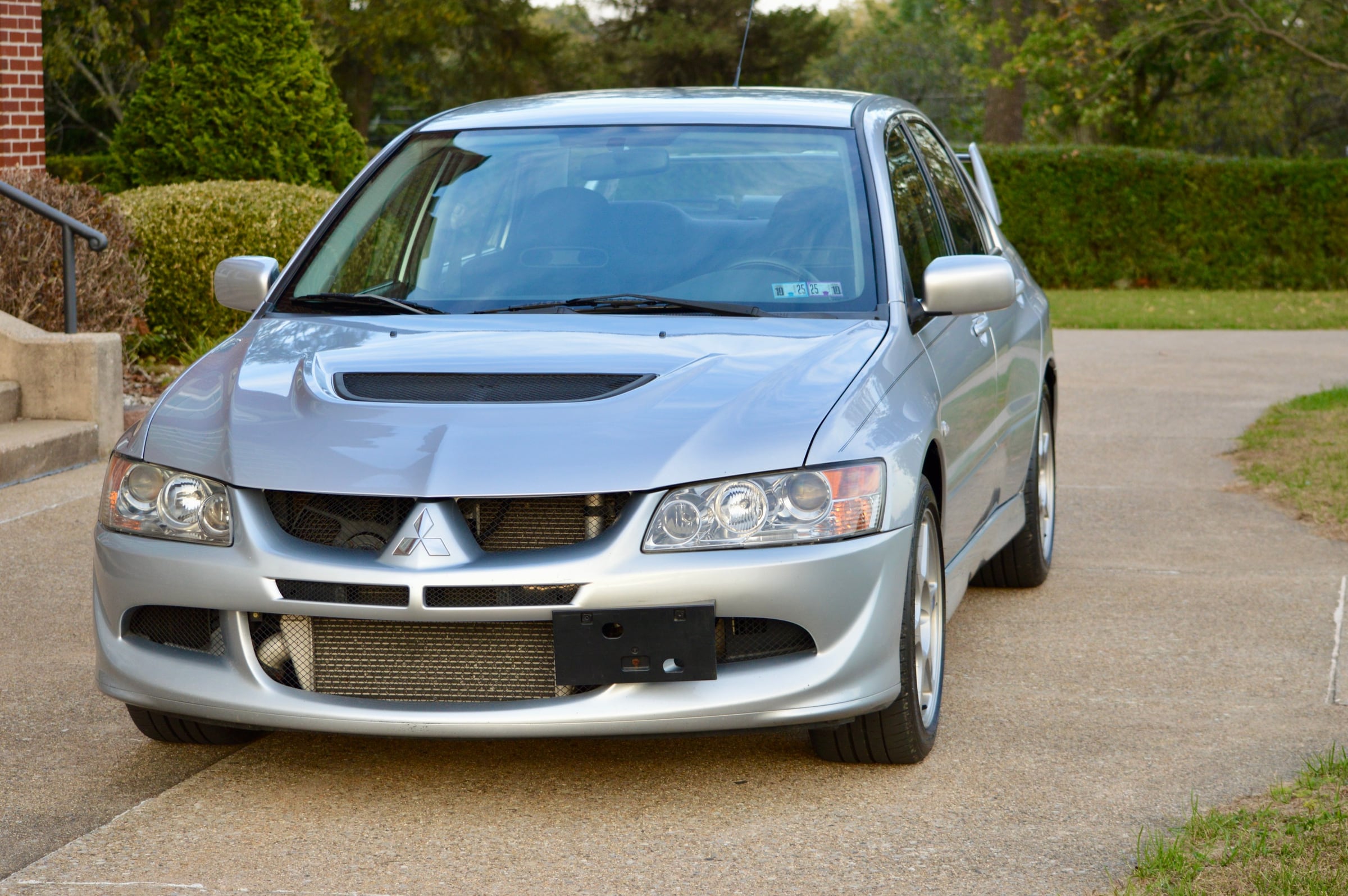
- Photo 1: 47k-Mile 2004 Mitsubishi Lancer Evolution VIII, Bring a Trailer listing by talonted (photo C3627807-A917-46B4-A341-68EFA2E9379C_1_201_a-04690)
For sale now
All Evo VIII for sale


Register your Evo
Claim your VIN or chassis number. Your car gets a page with its photos, its ownership chapters and every sale on record.
Register your EvoPhoto: Bring a Trailer listing by azautogallery
Comments
Members can correct a mistake in this article or add to it here.
Log in or sign up free to comment.