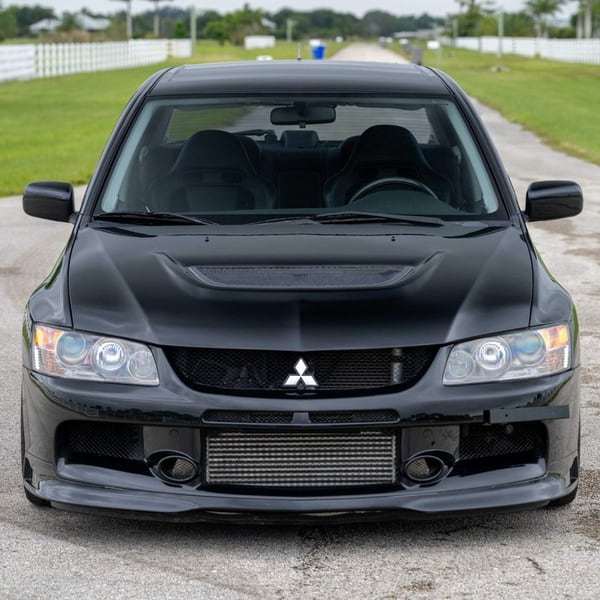
The difference between a Lancer and an Evo is everything that makes the car fast: the Evo is a Lancer sedan rebuilt with a turbocharged engine, full-time all-wheel drive with active differentials, Brembo brakes and its own suspension. In the last generation an ordinary US Lancer made 152 hp and the Lancer Evolution X made 291 hp. They share a name and a basic body shell, and very little of the hardware.
The difference between a Lancer and an Evo, part by part
The difference between a Lancer and an Evo: engine, drivetrain, brakes, body and price, set side by side for the last generation.
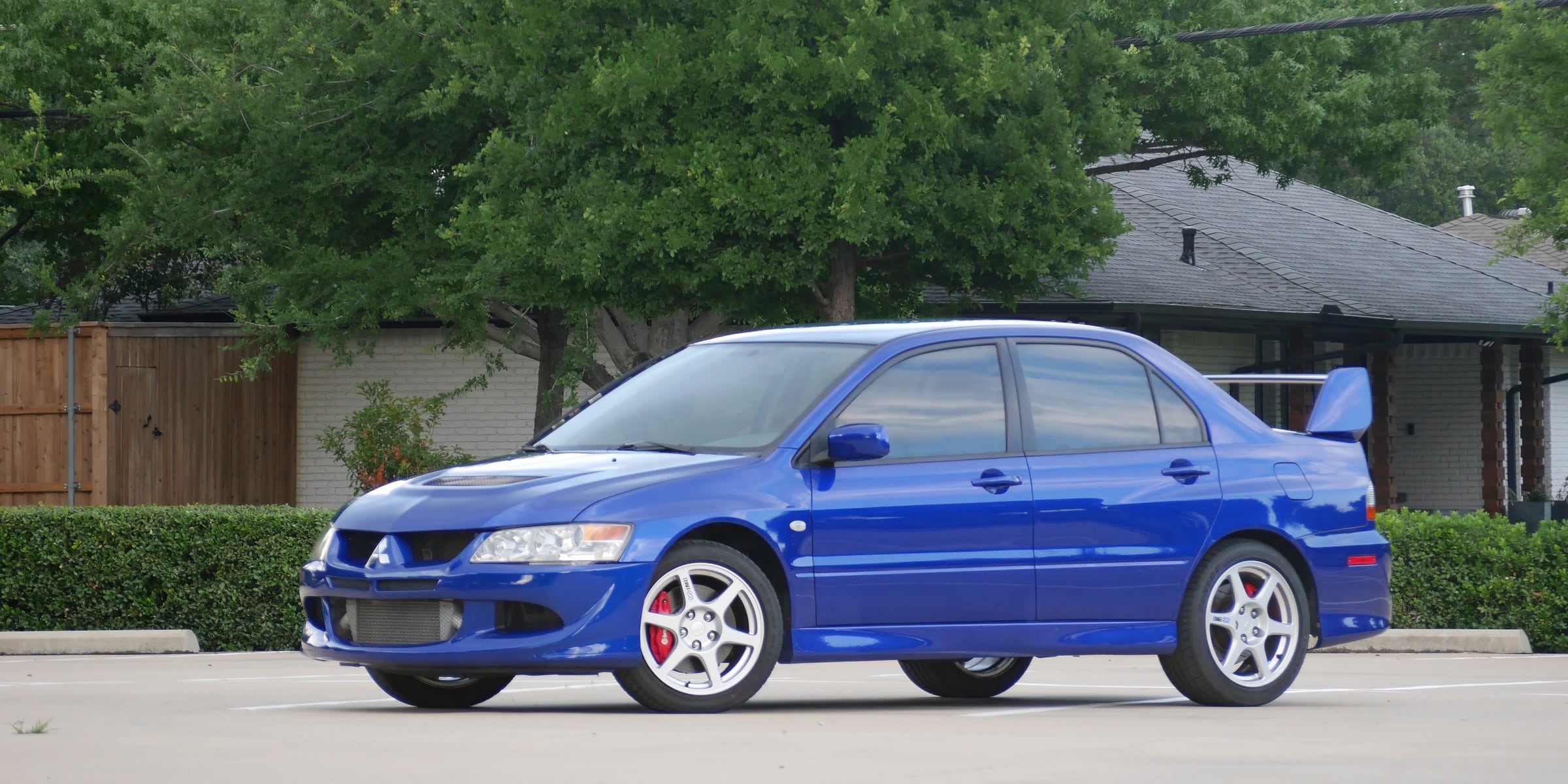
A 2005 Lancer Evolution VIII, the Lancer sedan body with the Evo's vented hood, wing and Brembo brakes. Photo: Bring a Trailer listing by Bob_Loblaw
152 hpLancer 2.0, 2008Non-turbo 4B11
291 hpEvo XTurbo 4B11
168 hpLancer GTS, 20092.4-liter 4B12
S-AWCEvo all-wheel driveActive differentials
22,202US Evo X cars2008 to 2015
At a glance
Lancer vs Lancer Evolution: the same car underneath
The Lancer is Mitsubishi's long-running compact car. Wikipedia dates it from 1973 to 2024 across ten generations, with worldwide production outside Taiwan ending in August 2017. The Lancer Evolution, in the same encyclopedia's words, is "a sports sedan and rally car based on the Lancer."
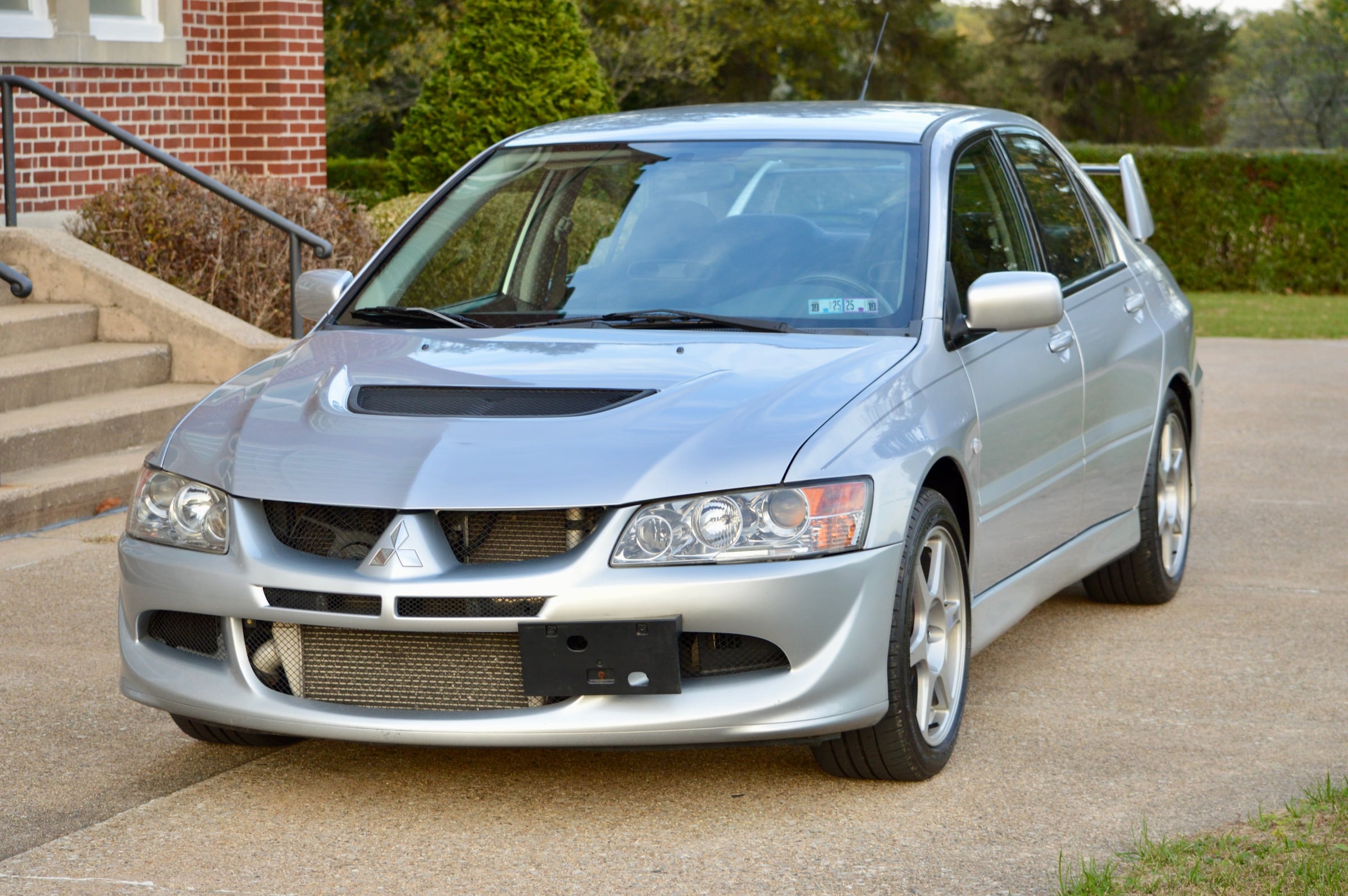
That is the right way to read Lancer vs Lancer Evolution. The Evo began as the version of the Lancer that Mitsubishi built to go rallying, and our article on the Evo rally car covers that history. Ten Evolutions followed, and Evo generations lists them all.
Mitsubishi's 2008 release shows how the two are related. It says the basic Lancer platform "gains further structural enhancements to the front and rear suspension areas to become the Lancer Evolution." The shell starts the same, and then the Evo gets its own parts.
What's the difference between a Lancer and an Evo, in one table
The table compares the last generation sold in the US, the 2008 model year cars. The Lancer column is the launch range of DE, ES and GTS trims as Wikipedia lists it, and the Evo column is from Mitsubishi's release.
| Item | 2008 Lancer | 2008 Lancer Evolution |
|---|---|---|
| Engine | 2.0-liter 4B11, no turbo | 2.0-liter 4B11, turbocharged and intercooled |
| Power | 152 hp | 291 hp at 6,500 rpm |
| Transmission | 5-speed manual or CVT | 5-speed manual or 6-speed TC-SST |
| All-wheel drive | Not offered at launch | S-AWC, standard |
| Front brakes | Standard Lancer brakes | Brembo, 13.8-inch rotors, 4-piston calipers |
| Wheels | Smaller, by trim | 18 x 8.5 inches |
152 hp2008 Lancer 2.0
168 hp2009 Lancer GTS 2.4
291 hp2008 Lancer Evolution
The engine
Both cars use an engine called 4B11, which is where much of the confusion starts. The Lancer's is a 2.0-liter without a turbocharger, rated at 152 hp, or 143 hp on California cars. The Evo's is the turbocharged and intercooled version, which Mitsubishi rates at 291 hp at 6,500 rpm and 300 lb-ft at 4,400 rpm.
The two share an 86 mm bore and stroke, and the resemblance ends about there. From 2009 the Lancer GTS moved to a 2.4-liter 4B12 with 168 hp and 167 lb-ft, still without a turbo. Our 4G63 engine article covers the engine the earlier Evos used.
The drivetrain
This is the biggest difference between Evo and Lancer. Every Evo X has Super All Wheel Control, or S-AWC, which ties together an Active Center Differential, an Active Yaw Control rear differential, stability control and Sport ABS. The front differential is a helical limited-slip unit.
The ordinary US Lancer launched without all-wheel drive on the list. Wikipedia records an all-wheel-drive Lancer SE arriving for 2012, with the 2.4-liter engine and a CVT only. A CVT is a continuously variable automatic, a gearbox the Evo never used.
The Evo's gearboxes are a five-speed manual on the GSR and the six-speed TC-SST twin-clutch on the MR. Our article on the automatic Evo explains the twin-clutch.
Body, brakes and suspension
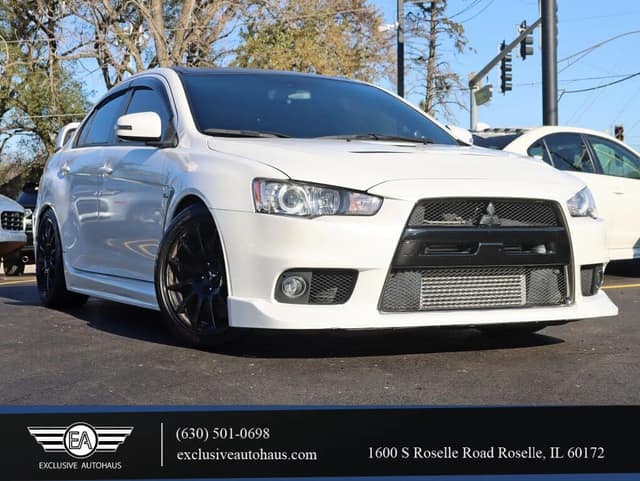
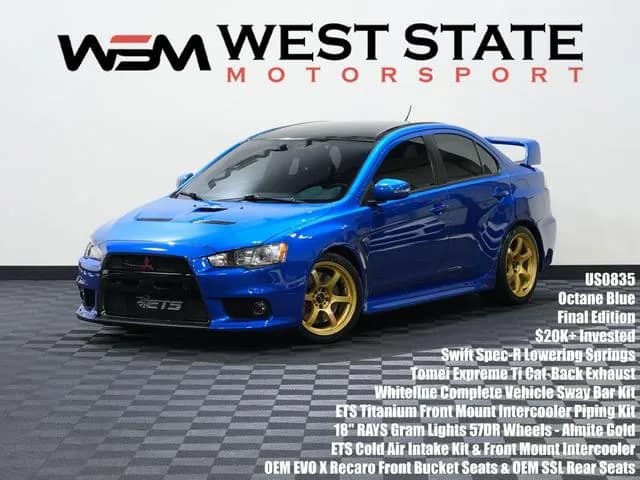
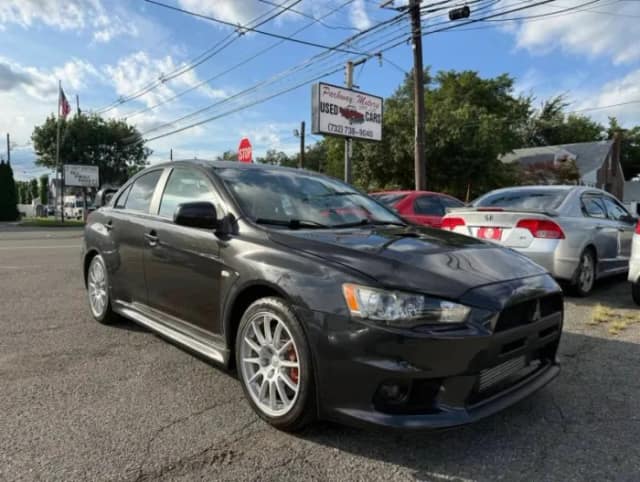
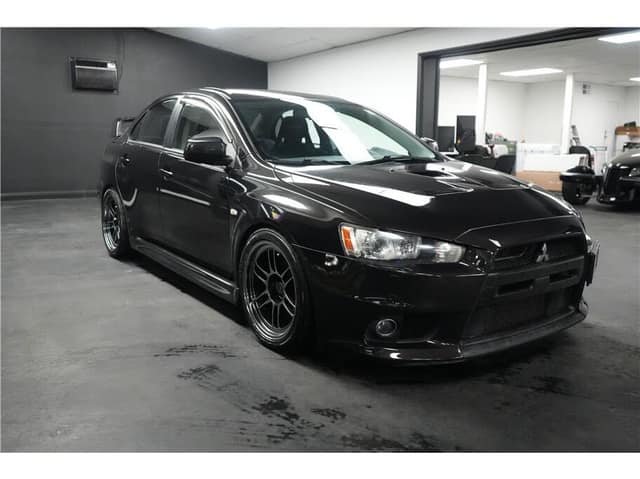
An Evo is not a Lancer with a body kit. Mitsubishi lists an aluminum roof, hood and front fenders on the Evo X, along with aluminum bumper beams. The hood has an air scoop and heat outlets, and the fenders are boxed out over 18-inch wheels.
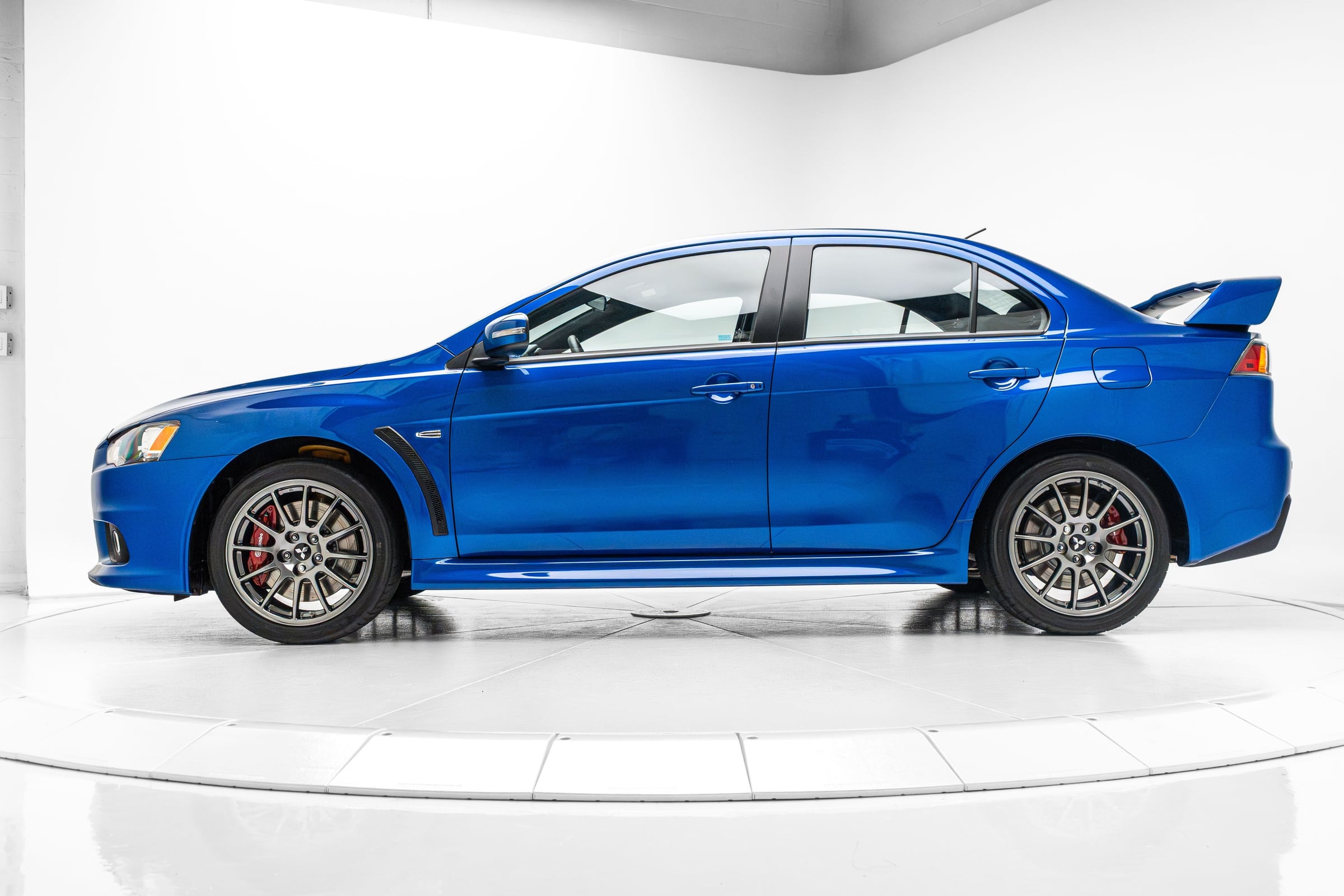
The suspension is the Evo's own, with inverted struts in front and a multi-link rear. The brakes are Brembo, with 13.8-inch front rotors and 13.0-inch rear rotors. Inside, the Evo has Recaro front seats.
The Lancer Ralliart, the car in between
For anyone asking what's the difference between Lancer and Evo, the Ralliart is the trim that blurs the answer. Wikipedia places it between the base models and the Evolution. It has a detuned turbo engine with a smaller turbocharger and, from 2009, the TC-SST gearbox only.
It is still not an Evo. The Ralliart's TC-SST has two modes where the Evo X MR has three, and its all-wheel drive is described as a simplified version of the Evolution X system with a mechanical limited-slip rear differential.
Price, rarity and how to tell them apart
The Evo cost far more new. MotorWeek's 2008 road test gives prices starting at $33,665 for the GSR and $38,965 for the MR. It also sold in far smaller numbers. Hagerty puts the US Evolution X at 22,202 cars for 2008 to 2015.
Current asking and sale prices for every generation are on our values page. A Lancer dressed to look like an Evo turns up for sale often enough that the chassis code is worth checking. A real Evo X carries the chassis code CZ4A, and our VIN decoder reads it.
The Evo ended first. Mitsubishi stopped building the Lancer Evolution after the 2015 model year, and Motor Authority noted at the time that "the humble Lancer on which it's based lives on for now."
Where to go next
- Evo X cars for sale lists the real ones on the market now.
- The Evo X page has the specs and the production table.
Sources and photo credits (11)
- Mitsubishi Motors North America, 2008 Lancer Evolution release
- Hagerty, on the Lancer Evolutions imported to the US
- MotorWeek, 2008 Mitsubishi Lancer Evolution GSR road test
- Motor Authority, Mitsubishi reveals details of the Evo Final Edition
- Wikipedia, Mitsubishi Lancer
- Wikipedia, Mitsubishi Lancer Evolution
- Wikipedia, Mitsubishi 4B1 engine
- Cover photo: 2005 Mitsubishi Lancer Evolution VIII, Bring a Trailer listing by Bob_Loblaw (photo Evo-BatP1060354-52090)
- Photo 1: 47k-Mile 2004 Mitsubishi Lancer Evolution VIII, Bring a Trailer listing by talonted (photo 747E949C-5D0E-4672-9A95-1E1FA8EDA5CF_1_201_a-04702)
- Photo 2: 341-Mile 2015 Mitsubishi Lancer Evolution Final Edition 5-Speed, Bring a Trailer listing by Bulletmotorsportsinc (photo DSC04614-99385)
- Articles page image: an illustration made with ChatGPT, not a photograph

Register your Evo
Claim your VIN or chassis number. Your car gets a page with its photos, its ownership chapters and every sale on record.
Register your EvoPhoto: Bring a Trailer listing by dirtybiker
Comments
Members can correct a mistake in this article or add to it here.
Log in or sign up free to comment.